A home for a family is never static. It needs to hold movement, noise, rituals, growth and change — all while still feeling calm, beautiful and intentional. For international families in particular, the home often becomes much more than a backdrop to daily life: it becomes the place where identity, comfort and belonging take shape.
At Lady J. Interiors, we believe a well-designed family home should not ask you to choose between elegance and practicality. It should give you both. The most successful spaces are those that support everyday life with ease, while still feeling personal, layered and quietly sophisticated.
If you are designing a home for your family in Sitges, these are the principles we return to again and again.
1. Begin with flow
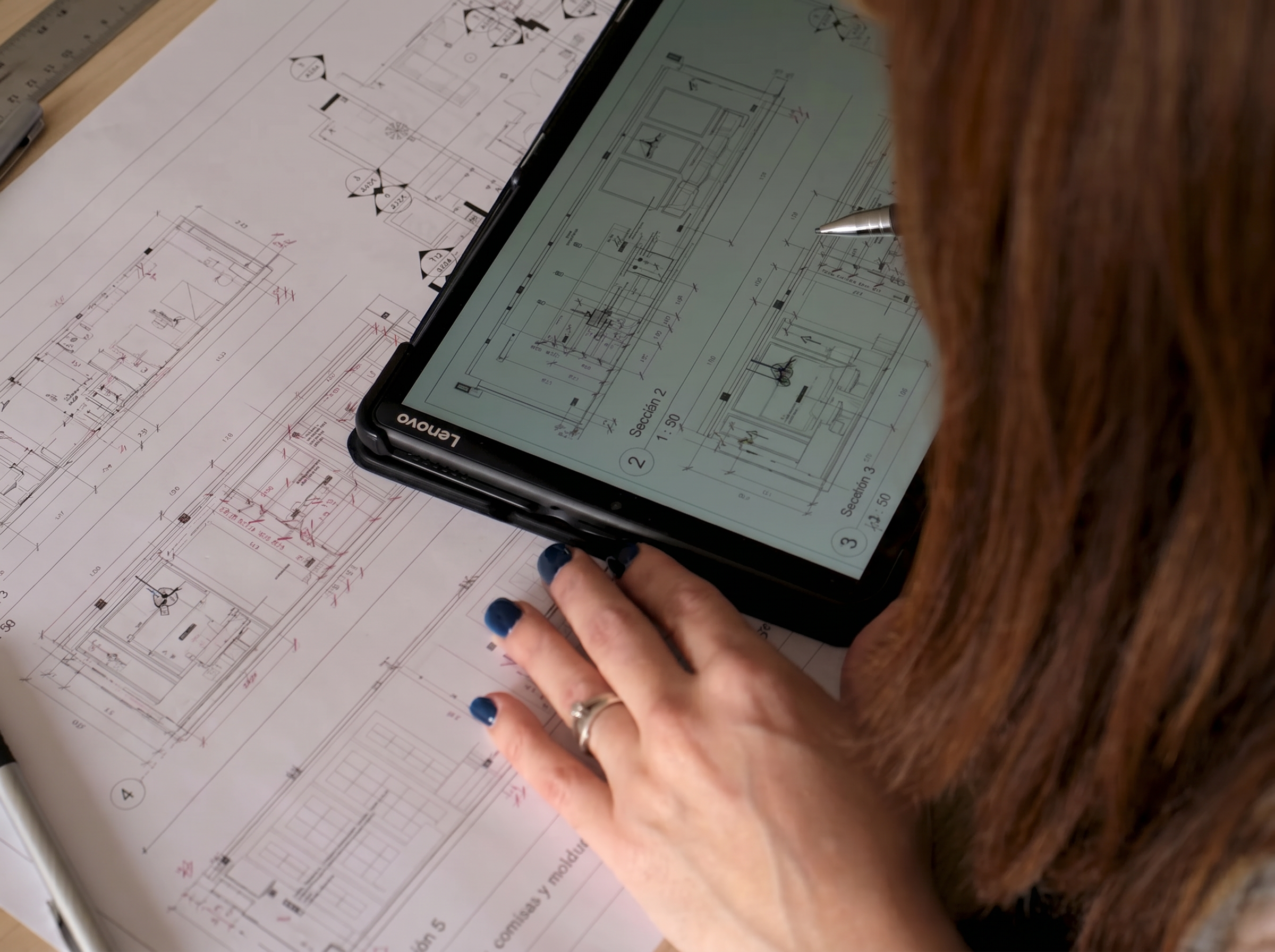
The way a family home functions depends heavily on its layout. Before thinking about finishes or furnishings, it is essential to understand how the spaces connect, how the family moves through them and where daily life naturally gathers.
Open-plan living can be particularly effective for families because it creates continuity between kitchen, dining and living areas. It allows different activities to happen at once, while still keeping everyone visually and emotionally connected. When the layout is considered well, the home feels easier to live in and far more generous.
A successful family layout should also consider access to terraces, gardens and outdoor areas, as well as the need for visual supervision when children are small. Sometimes that connection can be created through fully open spaces; in other cases, a glazed partition can offer separation without losing light or sightlines.
2. Design the kitchen as the heart of the home
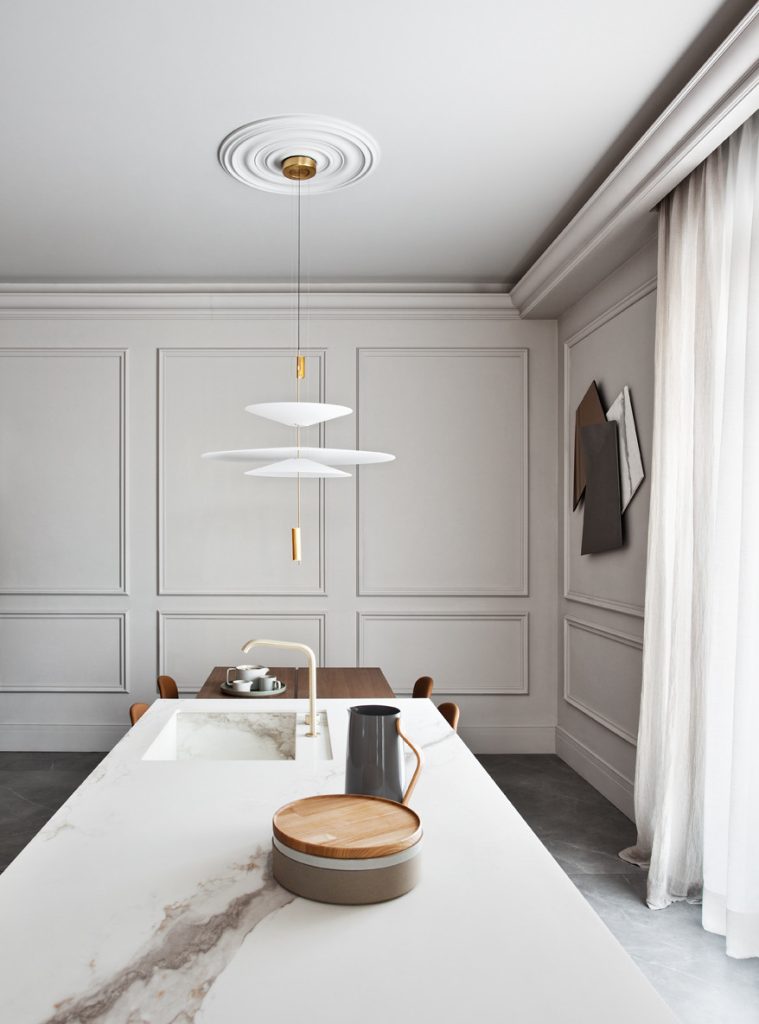
In many family homes, the kitchen has become the true centre of life. It is no longer only a place to cook, but a space to gather, talk, work, snack, learn and share time together.
A kitchen with an island or peninsula can create a natural meeting point for the whole family. It also allows different activities to coexist gracefully: preparing dinner, helping with homework, sharing a drink, or simply being together while each person does their own thing.
For families with children, the kitchen can also be a place of learning and participation. With the right planning, it can be safe, accessible and enjoyable for little ones, while still feeling refined and ordered.
3. Let rooms evolve
Children grow quickly, and the home should be able to grow with them. The most thoughtful family interiors are designed with flexibility in mind, so that rooms can adapt over time without requiring a full reset every few years.
Bedrooms work best when they can serve more than one purpose. A room may need to be a nursery today, a child’s room tomorrow and a teenage retreat later on. If the architecture allows it, having an extra room that can change function over time is a valuable advantage.
Neutral furniture, good storage and carefully chosen accents allow you to create a space that feels calm now and still works beautifully later. Colour can absolutely play a role, but it works best when it is used with intention rather than excess.
4. Protect a space for adults too
A family home should support the children, but it should also protect the parents’ need for privacy, focus and calm. In modern family life, where working from home is increasingly common, a dedicated study or workspace is not a luxury — it is often essential.
Having a place to concentrate, organise and retreat creates a sense of balance in the home. It also helps the house feel more complete, because not every room has to be oriented around the children’s needs.
5. Plan for storage from the start
A family home will only feel serene if it has somewhere for everything to go. Storage is not an afterthought; it is part of the architecture of daily life.
The best storage solutions are those that respond to real routines: where you drop your keys, where school bags land, where toys live, where devices charge and where seasonal items are kept. Bespoke storage makes this far easier, because it allows every centimetre to work intelligently.
It is also worth planning storage at child height, so that little ones can participate in keeping the home tidy. That small detail can make family life much smoother and more collaborative.
6. Choose materials that can live well
A beautiful family home also needs to be resilient. Materials, fabrics and finishes should be selected not only for how they look, but for how they will live over time.
Durable flooring, washable fabrics, well-made furniture and surfaces that age gracefully all help the home stay elegant without becoming precious. The aim is not to create a house that feels untouchable, but one that can be lived in comfortably and confidently.
In a busy family home, quality is always more valuable than quantity.
7. Keep the style calm and flexible
Because family life changes, it is wise to build the home around a more timeless foundation. Neutral furniture, understated architectural choices and a restrained palette give you room to evolve your style over time without needing to rebuild the whole house.
Your personality can then come through in the layers: artwork, textiles, accessories and small statement pieces. This creates a home that feels curated rather than overly fixed.
8. Think beyond the interior
The experience of a family home is shaped not only by its rooms, but by the way it connects to the outside. Entrances, terraces and gardens all contribute to the sense of ease, wellbeing and continuity.
Sometimes a small intervention outdoors can make a major difference to the way the whole home functions. A better transition to the garden, a shaded area for gathering, or a thoughtful outdoor dining space can transform daily life.
The most successful family homes are not the ones that try to solve everything at once. They are the ones designed with calm, intelligence and a clear understanding of how the family actually lives.